- English
- Español
- Português
- русский
- Français
- 日本語
- Deutsch
- tiếng Việt
- Italiano
- Nederlands
- ภาษาไทย
- Polski
- 한국어
- Svenska
- magyar
- Malay
- বাংলা ভাষার
- Dansk
- Suomi
- हिन्दी
- Pilipino
- Türkçe
- Gaeilge
- العربية
- Indonesia
- Norsk
- تمل
- český
- ελληνικά
- український
- Javanese
- فارسی
- தமிழ்
- తెలుగు
- नेपाली
- Burmese
- български
- ລາວ
- Latine
- Қазақша
- Euskal
- Azərbaycan
- Slovenský jazyk
- Македонски
- Lietuvos
- Eesti Keel
- Română
- Slovenski
- मराठी
- Srpski језик

What Is ZG 200-400 ZG15 Carbon Steel Casting?
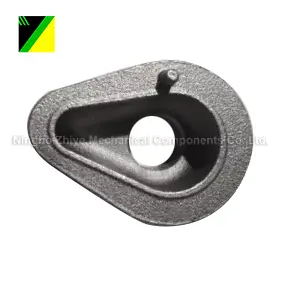
ZG 200-400 ZG15 Carbon Steel Casting is a widely used engineering material known for its balanced mechanical strength, excellent toughness, and reliable casting performance. In heavy-duty industrial sectors such as mining machinery, construction equipment, power generation, and transportation systems, ZG 200-400 ZG15 Carbon Steel Casting plays a critical role in manufacturing load-bearing and safety-related components.
Abstract
This article provides a comprehensive analysis of ZG 200-400 ZG15 Carbon Steel Casting, including its material composition, mechanical properties, production process, industrial applications, and performance advantages. Drawing on practical manufacturing experience from Ningbo Zhiye Mechanical Components Co.,Ltd., the guide helps engineers, procurement managers, and decision-makers understand why this material remains a preferred choice in demanding working conditions.
Table of Contents
- What topics are covered in this guide?
- What does ZG 200-400 ZG15 Carbon Steel Casting mean?
- What is the chemical composition of ZG15 carbon steel?
- What mechanical properties define ZG 200-400?
- How is ZG 200-400 ZG15 Carbon Steel Casting manufactured?
- Where is ZG15 carbon steel casting commonly used?
- Why choose ZG 200-400 ZG15 Carbon Steel Casting?
- How is quality controlled during production?
- What are common questions about ZG15 carbon steel casting?
What topics are covered in this guide?
This guide explains ZG 200-400 ZG15 Carbon Steel Casting from a technical and commercial perspective, covering material standards, structural performance, production workflow, and real-world applications supported by manufacturing expertise from Ningbo Zhiye Mechanical Components Co.,Ltd.
What does ZG 200-400 ZG15 Carbon Steel Casting mean?
ZG is the abbreviation for cast steel in Chinese industrial standards, while 200-400 indicates the minimum tensile strength and yield strength requirements. ZG15 refers to the carbon content range of approximately 0.15%, classifying it as low-carbon cast steel with good weldability and toughness.
ZG 200-400 ZG15 Carbon Steel Casting is designed to withstand moderate mechanical loads while maintaining structural stability under impact, vibration, and variable stress conditions.
What is the chemical composition of ZG15 carbon steel?
| Element | Typical Content (%) | Function |
|---|---|---|
| Carbon (C) | 0.12 – 0.18 | Controls strength and ductility |
| Silicon (Si) | 0.30 – 0.60 | Improves casting fluidity |
| Manganese (Mn) | 0.50 – 0.80 | Enhances toughness and strength |
| Phosphorus (P) | ≤ 0.035 | Controlled to avoid brittleness |
| Sulfur (S) | ≤ 0.035 | Maintained at low levels for weldability |
Ningbo Zhiye Mechanical Components Co.,Ltd. strictly controls chemical composition to ensure consistency and compliance with international quality expectations.
What mechanical properties define ZG 200-400?
- Tensile strength ≥ 400 MPa
- Yield strength ≥ 200 MPa
- Elongation ≥ 22%
- Good impact resistance at room temperature
- Stable performance after heat treatment
These properties make ZG 200-400 ZG15 Carbon Steel Casting suitable for dynamic load conditions and long-term service life.
How is ZG 200-400 ZG15 Carbon Steel Casting manufactured?
The manufacturing process typically includes raw material melting, precise chemical adjustment, mold preparation, controlled pouring, heat treatment, machining, and final inspection.
At Ningbo Zhiye Mechanical Components Co.,Ltd., advanced foundry equipment and strict process control ensure dimensional accuracy and internal structural integrity throughout production.
Where is ZG15 carbon steel casting commonly used?
- Construction machinery frames and brackets
- Mining equipment housings
- Railway and transportation components
- Power plant structural parts
- General industrial machinery supports
Its adaptability makes ZG 200-400 ZG15 Carbon Steel Casting a cost-effective choice for both standard and customized components.
Why choose ZG 200-400 ZG15 Carbon Steel Casting?
- Balanced strength and ductility
- Excellent weldability and machinability
- Stable supply and standardized performance
- Lower cost compared with alloy steel alternatives
- Wide application compatibility
These advantages explain why global buyers continue to source this material from experienced manufacturers such as Ningbo Zhiye Mechanical Components Co.,Ltd.
How is quality controlled during production?
Quality assurance includes chemical analysis, mechanical testing, dimensional inspection, non-destructive testing, and surface evaluation. Each batch of ZG 200-400 ZG15 Carbon Steel Casting is traceable and documented to meet customer and industry standards.
What are common questions about ZG15 carbon steel casting?
What industries rely most on ZG 200-400 ZG15 Carbon Steel Casting?
Industries such as construction, mining, power generation, and transportation rely on this material due to its reliability, strength balance, and economic efficiency.
What makes ZG15 carbon steel suitable for welding?
The low carbon content reduces cracking risk and allows stable weld joints without complex preheating requirements.
What heat treatment is commonly applied to ZG 200-400 castings?
Normalizing or annealing is commonly used to refine grain structure and improve mechanical consistency.
What standards does ZG 200-400 ZG15 Carbon Steel Casting follow?
It is typically produced according to Chinese GB standards and can be aligned with ASTM or EN requirements when specified.
What factors affect the service life of ZG15 carbon steel castings?
Material purity, heat treatment quality, operating environment, and proper installation all influence long-term performance.