- English
- Español
- Português
- русский
- Français
- 日本語
- Deutsch
- tiếng Việt
- Italiano
- Nederlands
- ภาษาไทย
- Polski
- 한국어
- Svenska
- magyar
- Malay
- বাংলা ভাষার
- Dansk
- Suomi
- हिन्दी
- Pilipino
- Türkçe
- Gaeilge
- العربية
- Indonesia
- Norsk
- تمل
- český
- ελληνικά
- український
- Javanese
- فارسی
- தமிழ்
- తెలుగు
- नेपाली
- Burmese
- български
- ລາວ
- Latine
- Қазақша
- Euskal
- Azərbaycan
- Slovenský jazyk
- Македонски
- Lietuvos
- Eesti Keel
- Română
- Slovenski
- मराठी
- Srpski језик

Why Choose Silica Sol Precision Casting for Oil Pipe Joints?
This article explores the silica sol precision casting oil pipe joint manufacturing process. We examine why this method dominates the oil & gas sector, break down its advantages and limitations, compare it with alternative processes, and provide real-world application cases. Ningbo Zhiye Mechanical Components Co.,Ltd. shares technical insights to help you specify the perfect joint.
📑 Table of contents
- 1. What is Silica Sol Precision Casting, and How Does It Apply to Oil Pipe Joint?
- 2. What Are the Decisive Advantages of Silica Sol Casting for Oil Pipe Joints?
- 3. What Are the Limitations or Disadvantages of Silica Sol Precision Cast Oil Pipe Joints?
- 4. Where Are Silica Sol Cast Oil Pipe Joints Most Commonly Us?
- 5. Silica Sol Precision Casting vs. Other Processes for Oil Pipe Joints
- 6. Frequently Asked Questions about Silica Sol Precision Cast Oil Pipe Joints
- 7. Conclusion
🔍 What is Silica Sol Precision Casting, and How Does It Apply to Oil Pipe Joints?
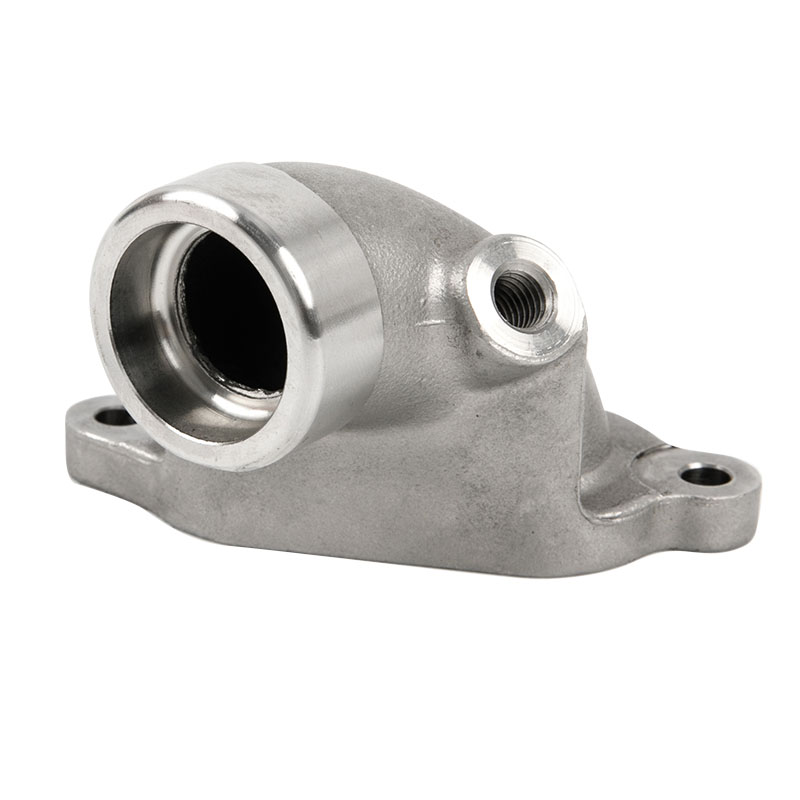
Ningbo Zhiye Mechanical Components Co.,Ltd. defines silica sol precision casting oil pipe joint as a component fabricated through an investment casting route where a silica-based binder creates a robust ceramic shell. Unlike traditional sand casting, this method uses a water-based silica sol (colloidal silica) to build a highly refractory mold, capable of reproducing fine details. For oil pipe joints, this means tight tolerances (often ±0.1mm), exceptional surface finish (Ra 1.6–3.2µm), and metallurgical integrity — essential for high-pressure hydrocarbon systems.
At its core, the process involves dipping a wax pattern repeatedly into a slurry containing fine refractory powder and silica sol. After drying, the shell is dewaxed and fired, leaving a smooth cavity. Molten stainless steel, carbon steel, or alloy is then poured. The resulting oil pipe joint exhibits minimal shrinkage and zero sand inclusion, a common defect in conventional castings. This is why global operators rely on this technology for wellhead equipment, manifold joints, and choke couplings.
⚙️ STRENGTHS & WEAKNESSES
✅ What Are the Decisive Advantages of Silica Sol Casting for Oil Pipe Joints?
From the workshop of Ningbo Zhiye Mechanical Components Co.,Ltd., we've observed that engineers choose this method for five primary reasons:
- Dimensional superiority: Near-net shape with ±0.1 mm tolerance, reducing machining costs by up to 40%.
- Superior surface finish: As-cast roughness comparable to machined surfaces, eliminating secondary polishing for many oil pipe joints.
- Complex geometries allowed: Undercuts, internal passages, and thin walls (down to 1.5 mm) can be cast integrally.
- Material versatility: Works with duplex stainless, Inconel, 17-4PH, and low-carbon steels required for sour service (NACE MR0175).
- Pressure integrity: Dense, non-porous microstructure due to rapid solidification in a pre-heated ceramic shell — vital for leak-proof joints.
These benefits directly translate to longer service life in offshore and downhole environments. For example, a recent project by Ningbo Zhiye supplied 15,000 silica sol cast oil pipe joints for a Middle Eastern field, with zero non-destructive test failures.
⚠️ What Are the Limitations or Disadvantages of Silica Sol Precision Cast Oil Pipe Joints?
No process is perfect. While silica sol casting excels in quality, it presents challenges that buyers and engineers must weigh:
| Limitation | Explanation & impact |
|---|---|
| Higher piece cost vs. sand casting | For very large joints (over 30 kg), silica sol may become expensive due to shell building time and raw material (silica sol, zircon sand). Suitable for small-to-medium series. |
| Size & weight constraints | Typical max weight ~100 kg (for oil pipe joints). Heavier components may require hybrid processes. |
| Longer lead time for tooling | Wax injection dies take 4–8 weeks; design changes cost more than with sand patterns. |
| Potential for shell cracking | If dewaxing autoclave parameters are not optimized, thin shells can crack, causing run-out. Ningbo Zhiye has proprietary automation to avoid this. |
Despite these, the total cost of ownership often favors silica sol when reliability and light weight are essential. The oil pipe joint must withstand vibration, thermal cycling, and corrosive media — exactly where precision casting outlasts forgings with weldments.
🔧 APPLICATIONS & USE CASES
📍 Where Are Silica Sol Cast Oil Pipe Joints Most Commonly Used?
Thanks to their metallurgical soundness, these joints are ubiquitous in:
- 🛢️ Wellhead equipment (choke & kill joints)
- ⛽ High-pressure manifolds
- ⚙️ Subsea connector hubs
- 🔥 Refinery piping (corrosion-resistant alloy)
- 🔩 Hydraulic couplings for BOP stacks
In these applications, the oil pipe joint must resist hydrogen embrittlement and high burst pressure. Silica sol casting enables controlled grain structure and eliminates shrinkage porosity that could initiate leaks. Ningbo Zhiye Mechanical Components Co.,Ltd. regularly supplies cast joints for API 6A and 17D specifications.
⚖️ Silica Sol Precision Casting vs. Other Processes for Oil Pipe Joints
| Method | Surface finish (µm) | Tolerance (mm) | Relative cost (1–5) | Typical alloy suitability |
|---|---|---|---|---|
| Silica sol casting | 1.6–3.2 | ±0.10 | 3.5 (medium-high) | All castable alloys, including superalloys |
| Sand casting (resin) | 6.3–12.5 | ±0.8 | 1.5 (low) | Carbon/low alloy only, prone to defects |
| Investment casting (ethyl silicate) | 3.2–6.3 | ±0.25 | 3.0 | Similar, but shell less green strength |
| Closed-die forging | Machined | ±0.2 (machined) | 4.5 | Wrought grades, simpler shapes |
As shown, silica sol strikes an excellent balance between precision and cost, particularly for oil pipe joints requiring moderate complexity and high reliability.
❓ COMMON QUESTIONS
Frequently Asked Questions about Silica Sol Precision Cast Oil Pipe Joints
Can silica sol cast oil pipe joints be used for sour gas (H₂S) environments?
Absolutely. Ningbo Zhiye Mechanical Components Co.,Ltd. produces joints in materials like 410 stainless, 17-4PH, and duplex (2205) that meet NACE MR0175/ISO 15156. The silica sol shell yields a fine-grained, homogenous structure with no segregated carbides, reducing sulfide stress cracking risk. However, proper post-casting heat treatment (e.g., solution annealing) is critical — something we validate with full mechanical certificates.
What is the maximum size of an oil pipe joint feasible with silica sol casting?
Typically, up to 600 mm in length and 80 kg in weight. Some foundries push to 120 kg with reinforced shells. For larger sizes, Ningbo Zhiye often recommends a segmented design or switching to centrifugal casting, but we evaluate each case. Remember, larger shells require careful drying to avoid cracking; our humidity-controlled shops allow consistent production of 50+ kg joints.
How does the surface finish of a silica sol cast joint affect its pressure rating?
Better surface finish (typically 3.2 µm Ra) eliminates stress raisers and micro-notches, which directly improves fatigue life and static burst pressure. A rough as-cast surface (like sand casting) can have valleys that act as crack initiation sites. For high-pressure oil circuits, many engineers specify silica sol precisely to avoid surface grinding. Independent tests show silica sol joints sustain 15–20% higher cyclic pressure compared to equivalent sand cast parts.
Are there cost disadvantages for small batch prototyping?
For prototypes (1–20 pieces), the wax injection tooling cost (typically $2,000–$5,000) might seem high. However, rapid prototyping via 3D-printed wax patterns is now a complementary option. Ningbo Zhiye Mechanical Components Co.,Ltd. offers hybrid solutions: 3D-printed patterns for initial samples, then hard tooling for volume. This way, you get the silica sol precision without committing to full tooling early.
📚 References: ASTM A732 / A732M – Standard Specification for Castings, Investment, Carbon and Low Alloy Steel; API 6A (Wellhead Equipment); technical bulletins from Ningbo Zhiye Mechanical Components Co.,Ltd.; "Precision Casting Handbook" (2nd ed., 2023).
📞 Conclusion
From rig floors to subsea manifolds, the silica sol precision casting oil pipe joint delivers reliability that few processes can match. Its near-net shape, superior surface, and alloy flexibility make it the preferred choice for critical service. While cost and size constraints exist, they are often offset by reduced machining and field failures.
🤝 Partner with expertsAt Ningbo Zhiye Mechanical Components Co.,Ltd., we have over two decades of experience in precision casting for oil & gas applications. Whether you need a standard NPT oil pipe joint or a custom alloy component with complex geometry, our engineers are ready to assist. Contact us today for a free design review and quotation — let's build safer, stronger connections.