- English
- Español
- Português
- русский
- Français
- 日本語
- Deutsch
- tiếng Việt
- Italiano
- Nederlands
- ภาษาไทย
- Polski
- 한국어
- Svenska
- magyar
- Malay
- বাংলা ভাষার
- Dansk
- Suomi
- हिन्दी
- Pilipino
- Türkçe
- Gaeilge
- العربية
- Indonesia
- Norsk
- تمل
- český
- ελληνικά
- український
- Javanese
- فارسی
- தமிழ்
- తెలుగు
- नेपाली
- Burmese
- български
- ລາວ
- Latine
- Қазақша
- Euskal
- Azərbaycan
- Slovenský jazyk
- Македонски
- Lietuvos
- Eesti Keel
- Română
- Slovenski
- मराठी
- Srpski језик

What Makes Stainless Steel Mould Silica Sol Investment Casting Essential for Precision Manufacturing?
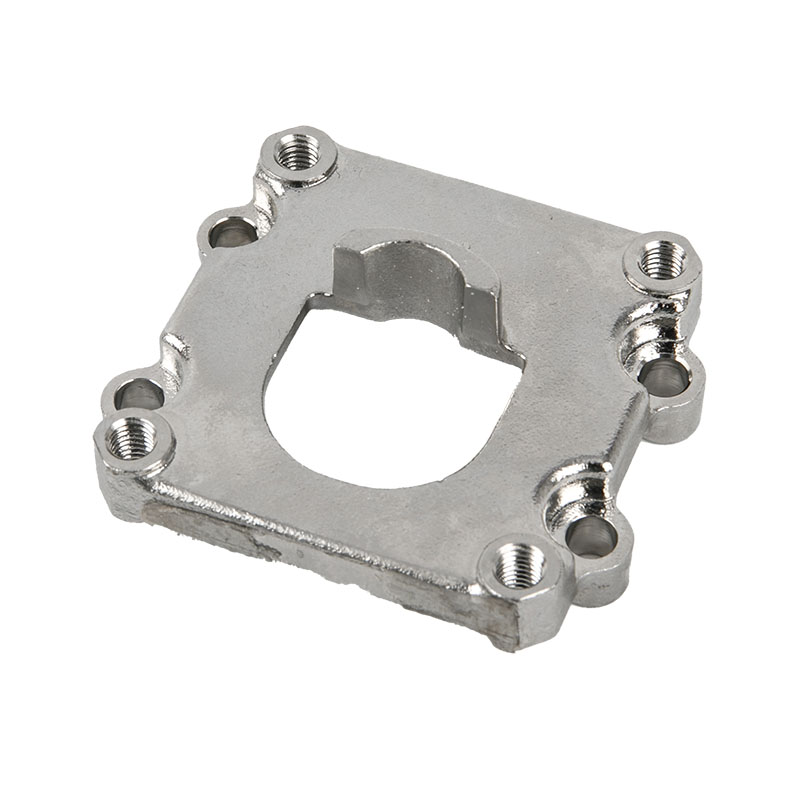
Modern industries demand components with exceptional dimensional accuracy, smooth surface finish, corrosion resistance, and structural reliability. Stainless Steel Mould Silica Sol Investment Casting has become one of the most trusted manufacturing methods for producing complex metal parts with consistent quality. From automotive and aerospace applications to marine hardware and food-processing machinery, this casting process offers unmatched flexibility and precision.
Article Summary
This article explores the complete process of Stainless Steel Mould Silica Sol Investment Casting, including its advantages, applications, material selection, quality standards, production workflow, cost factors, and common customer concerns. You will also learn how experienced manufacturers such as Ningbo Zhiye Mechanical Components Co.,Ltd. help businesses achieve high-quality precision castings with stable delivery and reliable technical support.
Contents
- 1. What Is Stainless Steel Mould Silica Sol Investment Casting?
- 2. Why Is Silica Sol Investment Casting Popular?
- 3. How Does the Manufacturing Process Work?
- 4. Which Stainless Steel Materials Are Commonly Used?
- 5. What Industries Use Investment Cast Components?
- 6. What Are the Major Advantages?
- 7. What Problems Can Customers Avoid?
- 8. How Does Silica Sol Compare with Water Glass Casting?
- 9. What Quality Standards Matter Most?
- 10. How to Choose a Reliable Casting Manufacturer?
- 11. What Are the Key Cost Factors?
- 12. How Can Surface Treatment Improve Performance?
- 13. Frequently Asked Questions
- 14. Final Thoughts
1. What Is Stainless Steel Mould Silica Sol Investment Casting?
Stainless Steel Mould Silica Sol Investment Casting is a precision metal forming process that creates highly detailed and dimensionally accurate stainless steel components. The process uses wax patterns, ceramic shell molding, molten metal pouring, and shell removal to manufacture complex shapes that would be difficult or expensive to produce using traditional machining methods.
The silica sol process refers to the use of silica sol binder during shell making. Compared with traditional water glass casting, silica sol technology provides:
- Higher surface smoothness
- Better dimensional accuracy
- Reduced machining requirements
- Improved structural consistency
- Excellent corrosion resistance
- Superior appearance quality
This process is especially suitable for producing stainless steel components with complicated internal structures, thin walls, curved surfaces, or tight tolerances.
Typical Products Include:
- Valve components
- Pump housings
- Marine hardware
- Automotive brackets
- Food machinery parts
- Medical equipment components
- Industrial connectors
- Architectural hardware
2. Why Is Silica Sol Investment Casting Popular?
Manufacturers across global industries prefer silica sol investment casting because it balances quality, efficiency, and design flexibility. Many customers today require complex stainless steel parts that meet strict tolerance requirements while maintaining attractive surface finishes.
Traditional manufacturing methods often involve extensive machining, welding, grinding, or assembly. Investment casting minimizes these extra operations.
| Feature | Silica Sol Investment Casting | Traditional Sand Casting |
|---|---|---|
| Surface Finish | Excellent | Rough |
| Dimensional Accuracy | High | Moderate |
| Complex Shapes | Excellent Capability | Limited |
| Machining Requirement | Low | High |
| Material Utilization | Efficient | Less Efficient |
These advantages help businesses reduce manufacturing costs while improving product consistency and long-term performance.
3. How Does the Manufacturing Process Work?
The silica sol investment casting process involves several precise production stages.
Step 1: Mold Design
Engineers create tooling according to product drawings and dimensional requirements.
Step 2: Wax Injection
Molten wax is injected into metal molds to form wax replicas of the final component.
Step 3: Wax Tree Assembly
Multiple wax patterns are assembled onto a central sprue to improve production efficiency.
Step 4: Ceramic Shell Building
The wax assembly is repeatedly dipped into silica sol slurry and coated with refractory sand.
Step 5: Dewaxing
The wax is melted and removed, leaving a hollow ceramic shell.
Step 6: High-Temperature Firing
The ceramic shell is fired to strengthen the mold and remove residual wax.
Step 7: Stainless Steel Pouring
Molten stainless steel is poured into the heated ceramic shell.
Step 8: Shell Removal
After cooling, the ceramic shell is broken away to reveal the cast parts.
Step 9: Finishing and Inspection
Grinding, polishing, machining, heat treatment, and quality inspections are performed.
4. Which Stainless Steel Materials Are Commonly Used?
Different industries require different material properties. Investment casting supports a wide range of stainless steel grades.
| Material Grade | Key Properties | Applications |
|---|---|---|
| 304 Stainless Steel | Corrosion resistance, versatility | Food machinery, hardware |
| 316 Stainless Steel | Excellent marine corrosion resistance | Marine and chemical equipment |
| 17-4PH | High strength and hardness | Aerospace and valves |
| 2205 Duplex Stainless Steel | High strength and corrosion resistance | Oil and gas industries |
Selecting the right material is essential for achieving optimal mechanical performance and product longevity.
5. What Industries Use Investment Cast Components?
Investment casting serves many industries where precision and durability are critical.
- Automotive Industry: Exhaust systems, turbocharger components, brackets
- Marine Industry: Boat fittings, anchors, connectors
- Medical Industry: Surgical instruments and precision hardware
- Food Processing: Hygienic stainless steel equipment
- Construction: Architectural hardware and structural fittings
- Energy Sector: Pump and valve components
- Aerospace: Heat-resistant structural parts
The ability to manufacture intricate geometries with minimal defects makes investment casting ideal for mission-critical applications.
6. What Are the Major Advantages?
Excellent Surface Quality
Silica sol casting produces smooth surfaces that reduce polishing and machining requirements.
Complex Shape Capability
Intricate internal channels and thin-wall structures can be manufactured efficiently.
High Dimensional Accuracy
Tight tolerances reduce assembly problems and improve compatibility with other components.
Material Efficiency
Near-net-shape production minimizes raw material waste.
7. What Problems Can Customers Avoid?
Many buyers face recurring problems when sourcing stainless steel castings from inexperienced suppliers.
- Surface defects and roughness
- Inconsistent dimensions
- Poor corrosion resistance
- Cracking during heat treatment
- Long delivery delays
- Weak mechanical performance
- Insufficient inspection reports
- Communication barriers during production
Professional manufacturers use advanced shell-making systems, controlled pouring temperatures, spectrometer analysis, and strict inspection procedures to prevent these issues.
8. How Does Silica Sol Compare with Water Glass Casting?
Many customers struggle to decide between silica sol casting and water glass casting.
| Comparison Item | Silica Sol Casting | Water Glass Casting |
|---|---|---|
| Surface Finish | Superior | Average |
| Precision | Higher | Moderate |
| Production Cost | Higher | Lower |
| Application Level | High-end products | General products |
For premium stainless steel products requiring excellent appearance and tight tolerances, silica sol investment casting is usually the preferred solution.
9. What Quality Standards Matter Most?
Reliable quality control is essential for industrial castings.
- Chemical composition testing
- Mechanical property testing
- Dimensional inspection
- X-ray inspection
- Magnetic particle testing
- Surface roughness analysis
- Pressure testing
- Salt spray corrosion testing
Leading manufacturers also implement complete traceability systems from raw material procurement to final shipment.
10. How to Choose a Reliable Casting Manufacturer?
Choosing the right manufacturing partner directly affects product quality, project timelines, and long-term business success.
Important Evaluation Factors:
- Production experience
- Engineering support capability
- Material expertise
- Quality management system
- Inspection equipment
- Export experience
- Customization flexibility
- Stable production capacity
Ningbo Zhiye Mechanical Components Co.,Ltd. focuses on precision investment casting solutions for global customers and provides customized stainless steel casting products for multiple industrial sectors.
11. What Are the Key Cost Factors?
Several elements influence investment casting costs.
| Cost Factor | Impact |
|---|---|
| Part Complexity | Complex designs require advanced tooling |
| Material Grade | Premium alloys increase cost |
| Production Quantity | Large orders reduce unit costs |
| Surface Treatment | Additional finishing raises cost |
| Tolerance Requirements | Higher precision requires stricter controls |
Working closely with experienced engineers can help optimize design structures and reduce unnecessary production expenses.
12. How Can Surface Treatment Improve Performance?
Surface finishing enhances both appearance and functionality.
- Electropolishing for smoothness
- Passivation for corrosion resistance
- Mirror polishing for decorative parts
- Sandblasting for matte textures
- Powder coating for added protection
- Heat treatment for improved strength
Different treatments are selected according to environmental conditions, product usage, and customer expectations.
13. Frequently Asked Questions
Can investment casting produce complex shapes?
Yes. Investment casting is ideal for highly detailed geometries, thin walls, and intricate internal structures.
Is silica sol investment casting suitable for large production volumes?
Yes. Once tooling is completed, the process supports stable mass production with consistent quality.
What tolerance levels can be achieved?
Silica sol investment casting offers excellent dimensional precision, often reducing the need for secondary machining.
Which stainless steel grade is best for marine environments?
316 stainless steel is widely preferred because of its superior resistance to chloride corrosion.
Can manufacturers provide customized castings?
Yes. Most professional suppliers provide OEM and ODM customization services according to drawings or samples.
14. Final Thoughts
Stainless Steel Mould Silica Sol Investment Casting continues to play a critical role in modern manufacturing because it combines precision, durability, flexibility, and efficiency. Whether producing complex industrial components or aesthetically refined hardware products, this process provides excellent reliability and long-term value.
By choosing an experienced manufacturer with strong engineering capability and strict quality management, businesses can significantly reduce production risks while improving product performance and market competitiveness.
Ningbo Zhiye Mechanical Components Co.,Ltd. provides professional silica sol investment casting services with advanced manufacturing technology, strict quality control, and customized engineering support for global customers.
Contact us today to discuss your project requirements and receive professional casting solutions tailored to your business needs.