- English
- Español
- Português
- русский
- Français
- 日本語
- Deutsch
- tiếng Việt
- Italiano
- Nederlands
- ภาษาไทย
- Polski
- 한국어
- Svenska
- magyar
- Malay
- বাংলা ভাষার
- Dansk
- Suomi
- हिन्दी
- Pilipino
- Türkçe
- Gaeilge
- العربية
- Indonesia
- Norsk
- تمل
- český
- ελληνικά
- український
- Javanese
- فارسی
- தமிழ்
- తెలుగు
- नेपाली
- Burmese
- български
- ລາວ
- Latine
- Қазақша
- Euskal
- Azərbaycan
- Slovenský jazyk
- Македонски
- Lietuvos
- Eesti Keel
- Română
- Slovenski
- मराठी
- Srpski језик

How Does Carbon Steel Silica Sol Investment Casting Improve C Gear Blank Performance?
A Carbon Steel Silica Sol Investment Casting C Gear Blank is designed for applications where a dependable combination of strength, dimensional consistency, wear resistance, and machining flexibility is required. Compared with manufacturing complex gear blanks entirely through conventional machining, silica sol investment casting can produce near-net-shape components with intricate geometries and controlled tolerances while reducing unnecessary material removal.
This article explains how carbon steel and silica sol investment casting work together, what buyers should consider before ordering C gear blanks, how casting quality affects subsequent machining and gear performance, and how Ningbo Zhiye Mechanical Components Co.,Ltd. can support customized component requirements.
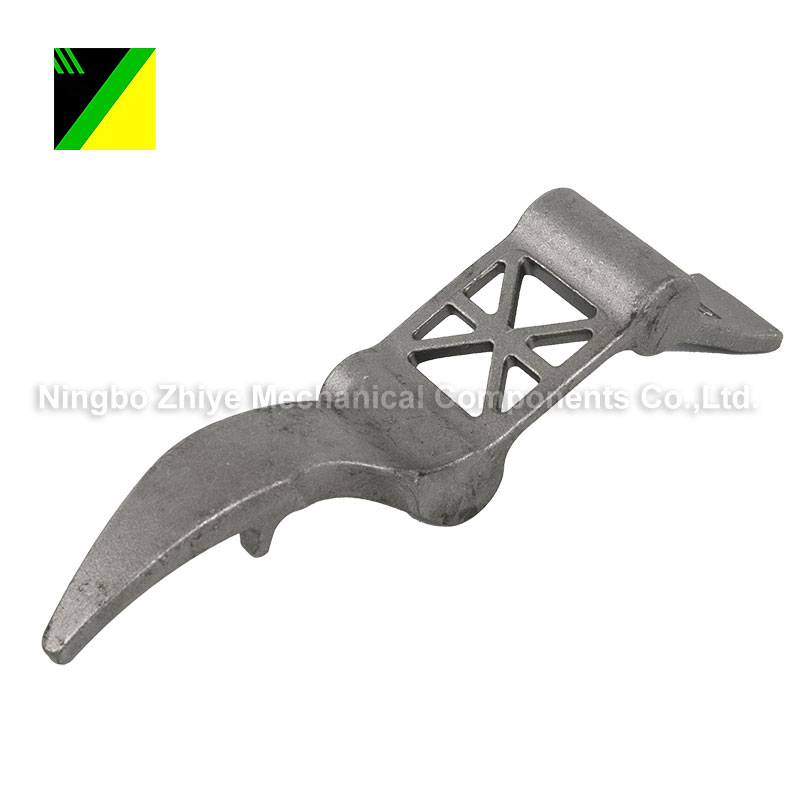
Table of Contents
- What Is a Carbon Steel Silica Sol Investment Casting C Gear Blank?
- How Does the Casting Structure Affect Gear Blank Quality?
- Why Is Carbon Steel Used for C Gear Blanks?
- How Is a Silica Sol Investment Casting Produced?
- Key Advantages for Industrial Buyers
- Dimensional Accuracy and Machining Allowance
- Quality Control and Inspection
- Typical Industrial Applications
- What Should Buyers Confirm Before Ordering?
- Casting Versus Conventional Manufacturing
- Supplier Capabilities That Matter
- Frequently Asked Questions
- Conclusion and Contact
What Is a Carbon Steel Silica Sol Investment Casting C Gear Blank?
A gear blank is the basic metal component from which the final gear profile, teeth, bores, keyways, or other functional features are machined or formed. A C gear blank may require specific dimensions, internal structures, mounting surfaces, or geometric features according to the final transmission or mechanical assembly.
```When the blank is manufactured from carbon steel using the silica sol investment casting process, the manufacturer can create a detailed near-net-shape casting before precision machining. This is particularly useful when the component has a complicated contour, varying wall thickness, recessed areas, or other shapes that would be expensive to produce from a solid steel block.
The investment casting process uses a sacrificial wax pattern to reproduce the required component geometry. A ceramic shell is built around the pattern, the wax is removed, and molten carbon steel is poured into the resulting cavity. After solidification, the ceramic shell is removed and the casting is cleaned, inspected, and prepared for subsequent operations.
In simple terms: the casting creates most of the required shape, while machining establishes the critical functional dimensions needed for assembly and gear manufacturing
How Does the Casting Structure Affect Gear Blank Quality?
A gear blank may appear simple, but its dimensional stability and internal integrity directly influence later machining and the performance of the finished gear. Casting defects such as shrinkage cavities, inclusions, excessive porosity, cold shuts, or cracks can create problems during machining or service.
Silica sol investment casting is valued for its ability to reproduce relatively complex geometry with a fine ceramic shell and controlled casting conditions. However, the casting process still needs to be carefully managed. Melting temperature, pouring practice, shell quality, gating design, riser design, alloy chemistry, heat treatment, and cooling conditions can all affect the final component.
- Stable geometry: reduces unexpected machining variation.
- Sound material: supports reliable mechanical performance.
- Controlled shrinkage: helps maintain dimensional consistency.
- Clean casting surfaces: simplify finishing and machining.
- Appropriate machining allowance: ensures critical surfaces can be accurately finished.
Why Is Carbon Steel Used for C Gear Blanks?
Carbon steel provides a practical balance between mechanical strength, machinability, availability, and cost. Depending on the specified grade and heat-treatment condition, carbon steel can be adapted to different mechanical requirements.
For gear-related components, material selection should never be based only on the nominal steel grade. Buyers should also consider hardness, tensile strength, yield strength, toughness, heat-treatment requirements, operating temperature, load conditions, lubrication, and the expected service environment.
| Requirement | Why It Matters |
|---|---|
| Strength | Helps the blank withstand machining and operational loads. |
| Hardness | Influences wear resistance and compatibility with subsequent gear processing. |
| Machinability | Affects cutting performance, tool life, and production efficiency. |
| Toughness | Important where impact or fluctuating loads are expected. |
| Heat-treatment response | Allows mechanical properties to be tailored when required. |
How Is a Silica Sol Investment Casting Produced?
A reliable C gear blank begins with a controlled manufacturing sequence. Although specific operations vary according to component design and customer specifications, a typical process includes the following stages:
- Drawing and engineering review: Dimensions, material grade, tolerances, machining areas, and inspection requirements are evaluated.
- Wax pattern production: A precision pattern is produced to represent the required casting geometry.
- Tree assembly: Multiple patterns may be attached to a runner system for efficient casting.
- Ceramic shell building: Silica sol-based ceramic layers are applied and reinforced until the shell reaches the required strength.
- Wax removal: The wax pattern is removed, leaving a precise internal cavity.
- Preheating and pouring: Molten carbon steel is poured into the prepared ceramic mold.
- Solidification and shell removal: After cooling, the ceramic shell is removed from the casting.
- Cutting and cleaning: Gates and runners are removed and the casting is cleaned.
- Heat treatment: Applied when required by the specified material and mechanical properties.
- Machining and inspection: Critical dimensions are finished and verified according to the drawing.
This sequence illustrates an important point for buyers: investment casting and machining should not be treated as isolated processes. The casting design must be developed with the final machining strategy in mind.
What Are the Main Advantages for Industrial Buyers?
Choosing a carbon steel silica sol investment casting can address several common manufacturing challenges, especially when the component geometry is more complicated than a simple turned or milled blank.
Complex Geometry
Investment casting can form shapes that may require multiple machining operations when produced from bar or billet material.
Material Efficiency
Near-net-shape production can reduce the amount of material removed during machining.
Surface Detail
A properly controlled ceramic shell can reproduce detailed casting features with a relatively refined surface.
Customization
Dimensions, material grades, machining allowances, and inspection plans can be developed around the customer's requirements.
How Should Dimensional Accuracy and Machining Allowance Be Managed?
One of the most important purchasing mistakes is expecting the raw casting to provide every final dimension without machining. Gear blanks commonly contain several surfaces that require additional machining, such as bores, mounting faces, reference diameters, keyways, and other functional areas.
A better approach is to divide the drawing into three categories:
- As-cast features: dimensions and surfaces that can remain in their cast condition.
- Machining-reference features: surfaces that require sufficient allowance for accurate finishing.
- Critical finished features: dimensions that must be machined and inspected to the customer's final tolerance.
Machining allowance should be neither unnecessarily large nor too small. Excessive allowance increases machining time, material consumption, and tool wear. Insufficient allowance can prevent the machinist from completely removing casting irregularities or reaching the required final dimension.
Buyer tip: Always provide the complete drawing, tolerance requirements, datum information, heat-treatment requirements, and surface specifications when requesting a quotation for a customized C gear blank.
How Can Casting Quality Be Verified?
Quality control should cover both the raw casting and the finished machined component. A professional inspection plan may include different methods depending on the application and customer specification.
| Inspection Area | Typical Purpose |
|---|---|
| Chemical composition | Confirms the material conforms to the specified grade. |
| Visual inspection | Identifies surface defects, cracks, incomplete filling, and other visible problems. |
| Dimensional inspection | Checks critical dimensions against engineering drawings. |
| Hardness testing | Verifies the required material condition when hardness is specified. |
| Non-destructive testing | May be used to identify certain internal or surface discontinuities. |
For critical mechanical applications, inspection requirements should be agreed before mass production rather than added after the casting process has begun.
Where Can C Gear Blanks Be Used?
Carbon steel investment cast gear blanks can be considered for a wide range of industrial components where strength, manufacturability, and customized geometry are important.
- Industrial transmission systems
- Gearbox and reducer assemblies
- Material-handling equipment
- Construction and agricultural machinery
- Automated production equipment
- Pumps and mechanical drive systems
- General mechanical power-transmission components
- Customized OEM machinery
The appropriate material and manufacturing route depend on the actual load, speed, operating environment, gear design, heat treatment, and final performance requirements.
What Should Buyers Confirm Before Ordering?
A clear technical specification can significantly reduce quotation errors, sample revisions, and production delays. Before placing an order, buyers should confirm:
- Required carbon steel grade or applicable material standard.
- Complete 2D engineering drawing and, when available, 3D model.
- Raw casting dimensions and final machined dimensions.
- Machining allowance and designated machining surfaces.
- Heat-treatment requirements.
- Surface-finish expectations.
- Critical dimensional tolerances and datum references.
- Required inspection reports or material certificates.
- Annual demand, batch quantity, and expected delivery schedule.
- Packaging and corrosion-protection requirements.
Providing these details at the beginning allows the manufacturer to evaluate tooling, casting feasibility, machining requirements, and inspection procedures more accurately.
How Does Investment Casting Compare With Conventional Manufacturing?
| Factor | Silica Sol Investment Casting | Machining From Solid Stock |
|---|---|---|
| Complex shapes | Well suited to complex near-net shapes | May require multiple machining operations |
| Material utilization | Can reduce machining waste | Can generate substantial removed material |
| Tooling | Requires pattern/tooling development | Less casting-specific tooling |
| Large production runs | Can become highly efficient after process stabilization | Machining time may remain significant |
| Customization | Suitable for engineered OEM designs | Flexible but potentially machining-intensive |
There is no universal manufacturing method for every gear blank. The best solution depends on geometry, quantity, material, tolerances, machining requirements, tooling investment, and total production cost.
What Supplier Capabilities Matter Most?
When selecting a manufacturer for a customized carbon steel silica sol investment casting C gear blank, buyers should look beyond the quoted unit price. A low initial quotation can become expensive if dimensional instability, casting defects, poor communication, or inconsistent batches create downstream costs.
Important supplier evaluation points
- Experience with carbon steel investment casting.
- Ability to interpret engineering drawings and 3D models.
- Pattern and tooling development capability.
- Controlled silica sol shell-building processes.
- Melting and chemical-composition control.
- Heat-treatment and machining coordination.
- Dimensional and surface inspection capability.
- Stable production capacity for repeat orders.
- Clear communication regarding tolerances and manufacturability.
- Ability to provide samples before volume production.
Ningbo Zhiye Mechanical Components Co.,Ltd. focuses on customized mechanical components and supports customers requiring engineered casting solutions. For C gear blanks and similar OEM components, the manufacturing process should be developed around the customer's drawings, material requirements, dimensional tolerances, machining needs, and intended application rather than relying on a generic product specification.
Frequently Asked Questions
1. What is the main purpose of a C gear blank?
A gear blank provides the basic body of a gear before final gear teeth, bores, keyways, mounting surfaces, and other functional features are machined or processed.
2. Why use silica sol investment casting?
Silica sol investment casting can produce detailed near-net-shape components with good surface quality and controlled geometry, making it useful for complex mechanical parts that would otherwise require extensive machining.
3. Can carbon steel C gear blanks be customized?
Yes. Customized production can be developed according to the required steel grade, dimensions, geometry, machining allowance, heat treatment, tolerances, surface requirements, and inspection specifications.
4. Does the casting need additional machining?
Usually, critical functional surfaces require machining to achieve final dimensions and tighter tolerances. The raw casting is generally intended to provide the near-net shape rather than every final precision feature.
5. What information is needed for a quotation?
A manufacturer will normally need the engineering drawing or 3D model, material specification, estimated quantity, tolerance requirements, heat-treatment requirements, machining requirements, inspection standards, and packaging expectations.
6. How can buyers reduce production problems?
The most effective approach is to clarify critical dimensions, machining surfaces, material standards, quality requirements, and acceptance criteria before tooling and mass production begin. A sample approval process can also help confirm the manufacturing approach.
Conclusion: Building a More Reliable C Gear Blank Supply
A Carbon Steel Silica Sol Investment Casting C Gear Blank can be an effective solution when a mechanical component requires a combination of customized geometry, dependable carbon steel properties, controlled casting quality, and efficient subsequent machining. The value of the process is not simply the ability to cast metal into a particular shape. The real advantage comes from coordinating material selection, pattern design, ceramic shell quality, casting parameters, heat treatment, machining allowance, and inspection as one integrated manufacturing process.
For OEM buyers, the right supplier should be capable of translating engineering requirements into a stable production process while maintaining consistent quality from prototype through repeat production. Clear drawings, realistic tolerances, defined inspection requirements, and early technical communication are essential to achieving that goal.
Need a Customized Carbon Steel C Gear Blank?
If you are sourcing a precision Carbon Steel Silica Sol Investment Casting C Gear Blank, Ningbo Zhiye Mechanical Components Co.,Ltd. can work with your drawings and technical specifications to develop a suitable customized manufacturing solution.
Contact us with your drawings, material requirements, annual quantity, and dimensional specifications to discuss your project and obtain a tailored quotation.